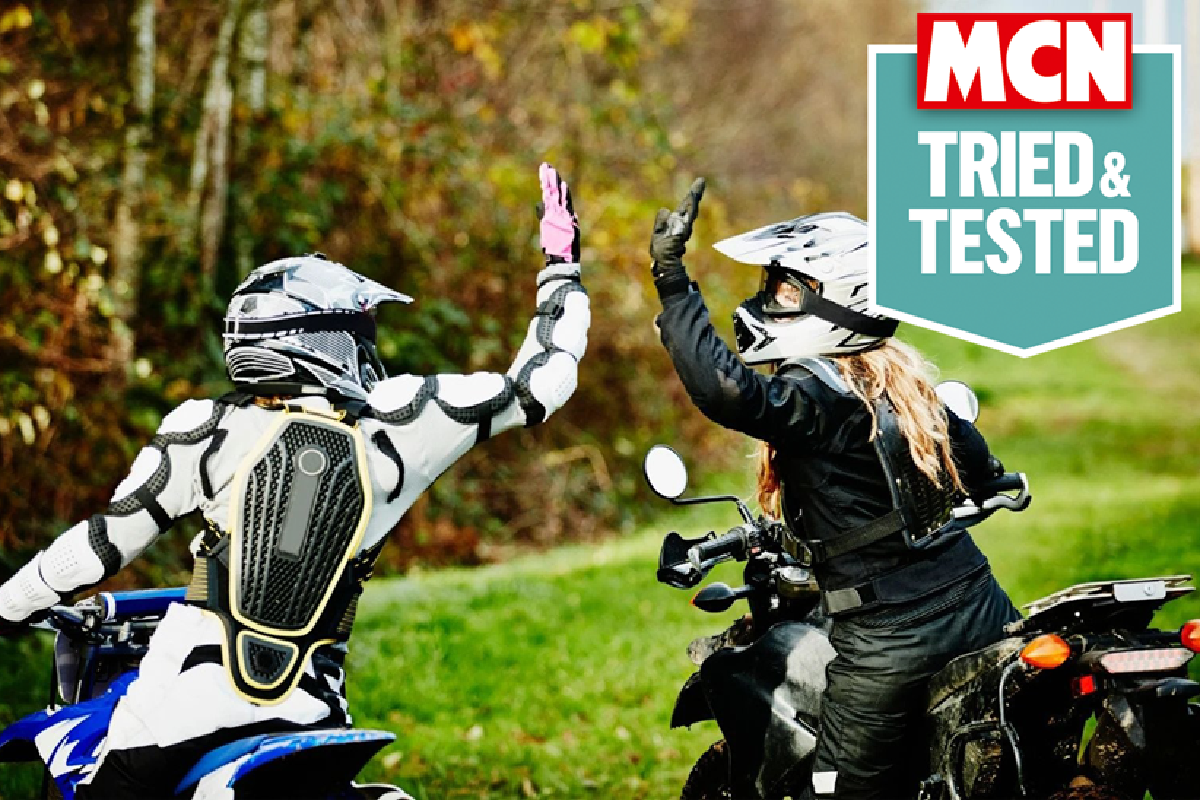

Riding a motorcycle gives a feeling of liberation unlike any other, but the more we do it, the higher the chances we’ll find ourselves in a difficult situation. That’s where good motorcycle armour comes in. Best motorcycle armour at a glance:
Commuting – Helite e-Turtle 2 Electronic Airbag Vest Touring – Alpinestars Nucleon KR-2 Back Protector Off-road – Alpinestars Bionic Tech V3 Armoured Vest Track-day – Knox Track Vest MK3 Adventure – Klim Ai-1 Rally Aribag Vest
Whichever way you look at it, motorcycling is dangerous, and motorcycle armour is often our first line of defence against injury. Decent armour will offer a layer of impact resistance to spread the forces of an impact across a wider area, reducing both the chance and severity of a potential injury. Jump to:
Types of motorcycle armour explained What to consider before buying The best motorcycle armour for all riding styles How MCN tests motorcycle armour
Types of motorcycle armour explained Integrated armour
Chances are this is what comes to mind when you hear about motorcycle armour – the kind that comes included in almost every motorcycle jacket or pair of riding jeans. The big benefit to integrated armour is its ubiquity – it’s been around for decades, and now it can be put into garments relatively cheaply.
It’s by far the most convenient way to wear your armour too; just put your jacket on, and go for a ride safe in the knowledge your armour is right where it’s supposed to be. Integrated armour can also be added and/or upgraded easily after purchase, and that usually works out the cheapest way to add extra protection to your garment.
They don’t offer as much safety as dedicated protectors though, and are usually a brand specific fit. Integrated armour can also move out of place in a crash, shifting away from the point it’s meant to protect, if the fit of the garment isn’t quite right. Back & Chest protectors
Back and chest armour are often considered optional extras, but the protection they offer shouldn’t be underestimated. Hard impacts to the chest can be fatal, and that’s the area most likely to take the hit when someone pulls out in front of you – the most common kind of motorcycle crash.
Your back is also a particularly vulnerable part of your body while riding. a study from the Journal of Trauma has shown that if you do injure your back in a motorcycle crash, it’ll probably have life-changing consequences. Because of this safety risk, back protectors are now a requirement for most track days in the UK.
Most dedicated protectors combine back and chest protection into one, often exceed the CE test’s standards for safety, and cover more area on your back and chest than integrated options. They’ve come a long way since the early days of strapping a lobster shell to your back, adding a lot more safety to the jacket you already own.
Find out more about back protectors in our dedicated guide to motorcycle back protectors. Armoured under-layers
Armoured shirts and trousers embrace the layering philosophy; the armoured shirt/trousers are the bottom layer for impact protection, while you can wear any jacket and trousers for abrasion resistance if you need it. This means the armour is as close to your body as possible, so it can’t move out of place, and you can wear any motorcycle jacket or trousers you like on top. They also tend to be light-weight and breathable, but they are specialised garments, and can be quite expensive at the high-end. Airbags
Motorcycle airbags have blown up in recent years (pun not intended), as they offer significantly more impact protection than standard motorcycle armour ever will. Just like in a car, they rapidly expand in the event of a crash, and reduce impact energy with cushioned air instead of hard plastics.
They are currently the most expensive option, but if you can’t put a price on safety, motorcycle airbags are the way to go.
Find out more in our dedicated guide to motorcycle airbags. What to consider before buying Material and construction
Motorcycle armour is typically made of hard plastics, but other materials are often used as well. Higher grade armour might be made of different rubbers, memory foam, silicone, or a ‘viscoelastic’ material that’s flexible to wear, but stiffens up on impact. Certification and CE standards
CE motorcycle certifications were introduced to standardise motorcycle safety, accelerate its widespread adoption, and help riders understand what to expect from their protective equipment in the event of an accident. To bear the CE badge, armour must pass a series of lab tests that mimic real-world accidents. CE certified armour doesn’t always stop you from getting injured, but it reduces the severity of your injury, which can drastically reduce the chance of medical complications thereafter.
Any CE rated motorcycle garment made for use on the roads is classed as PPE, and must be sold with CE certified armour to stay on the right side of UK law. At minimum, you should find shoulder, elbow, and/or knee armour in any motorcycle garment you’re looking at buying, otherwise it’s not a legitimate motorcycle garment. It’s not illegal for you to ride without motorcycle armour if you choose, but it is illegal for manufacturers to sell you motorcycle clothing that doesn’t feature CE certified armour.
The current CE standard for motorcycle armour is EN1621, which covers armour for the shoulders, elbows, back, chest, hips, and knees. They each come rated to level 1 or level 2, which denote how protective they are. Level 1 armour is designed to offer reasonable protection against the majority of city speed crashes, while level 2 is designed to offer reasonable protection against common impacts at average single-carriageway speeds.
Find our full guide to motorcycle CE ratings explained. Fit and comfort
Armour doesn’t protect well if it doesn’t fit well, so getting a good fit is important to consider; look for armour that’s designed to contour the rider. Bare in mind that CE level 1 armour can be made incredibly thin and flexible, and the extra comfort might be worth the concession to safety for you. Ventilation
Many armour designs feature ventilation, which stops you getting sweaty spots where the armour sits. The ventilation holes offer some weight savings too, and armour that has them is usually more flexible and comfortable as a result. The best motorcycle armour for all riding styles
Any kind of motorcycle armour will protect you, but certain armour is better suited to different kinds of riding. Here, we’re going to break it down by the most common use-cases, and share our favourite options for each style of riding.